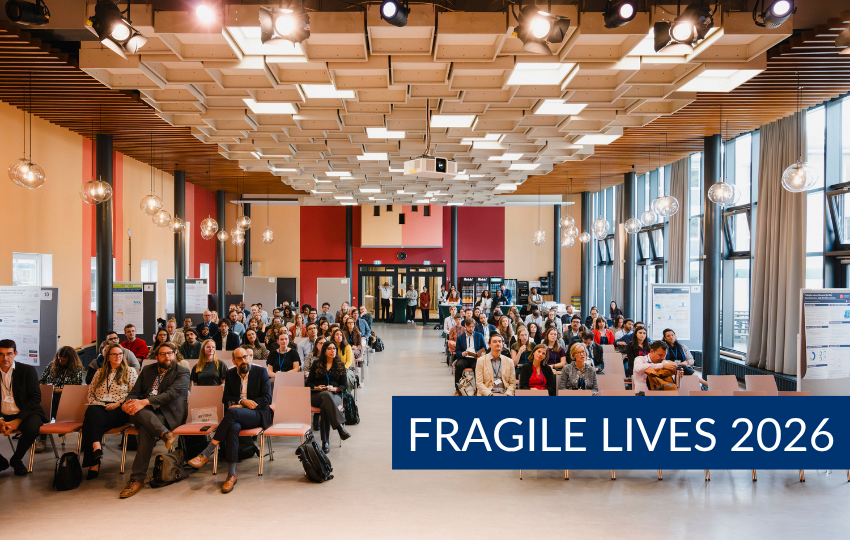
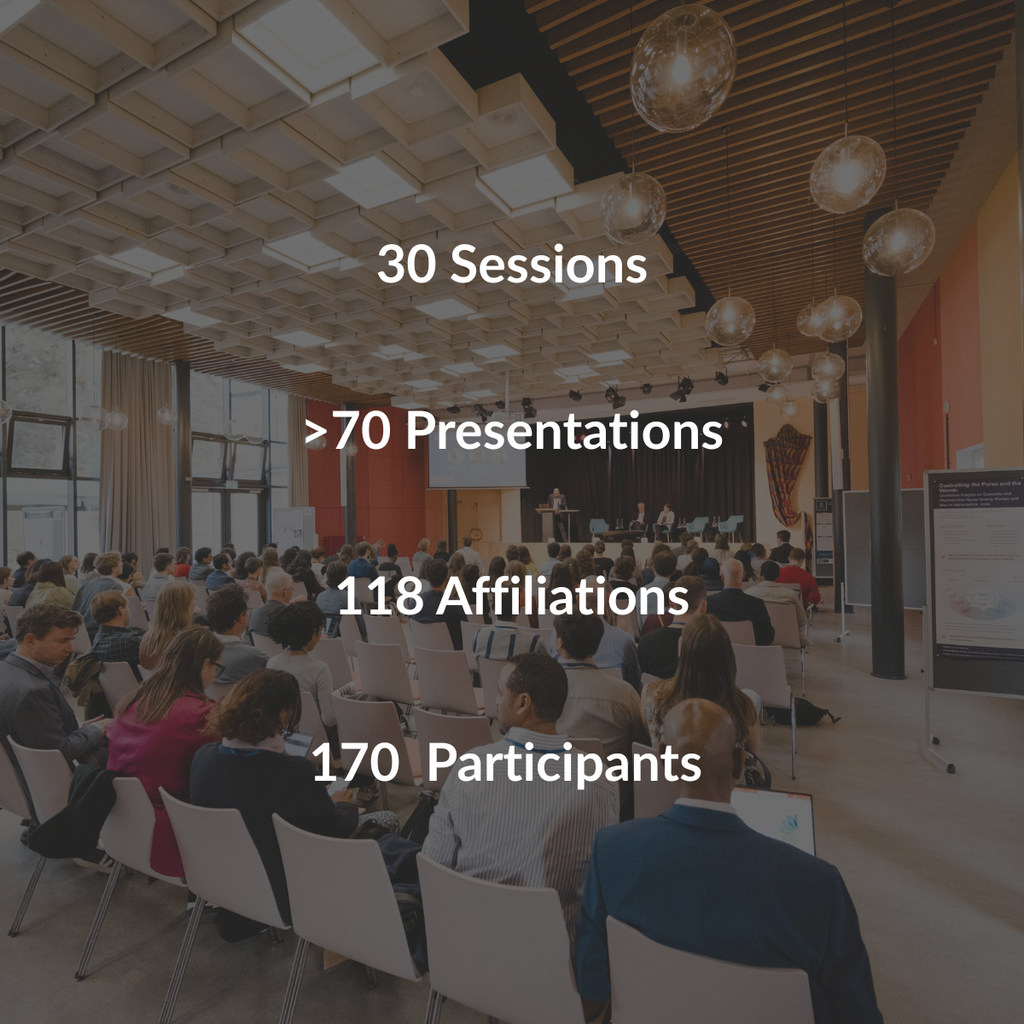
Fragile Lives 2026 marked the third edition of an annual expert conference on the role of scientific evidence in shaping policies for fragile and conflict-affected areas. Held on 30 September and 1 October 2026 at marta’s Gästehäuser Hauptbahnhof Berlin, the conference brought together 170 participants across 30 sessions, and supported more than 70 research presentations.
Program highlights
The conference opened with an address from Henning Plate (German Federal Ministry for Economic Cooperation and Development (BMZ)), who emphasised the importance of rigorous evidence for policymaking, especially in an era of funding cuts. He called on researchers and humanitarian practitioners to work more closely than ever to overcome the challenges facing fragile contexts. Bettina Iseli (Welthungerhilfe) stressed the role of food insecurity in fragile contexts, noting that lasting security depends on access to food and livelihoods. She underlined the importance of strengthening local capacities, acting early, and combining quantitative, qualitative and local knowledge to support sound decision-making during crises.
The keynote addresses
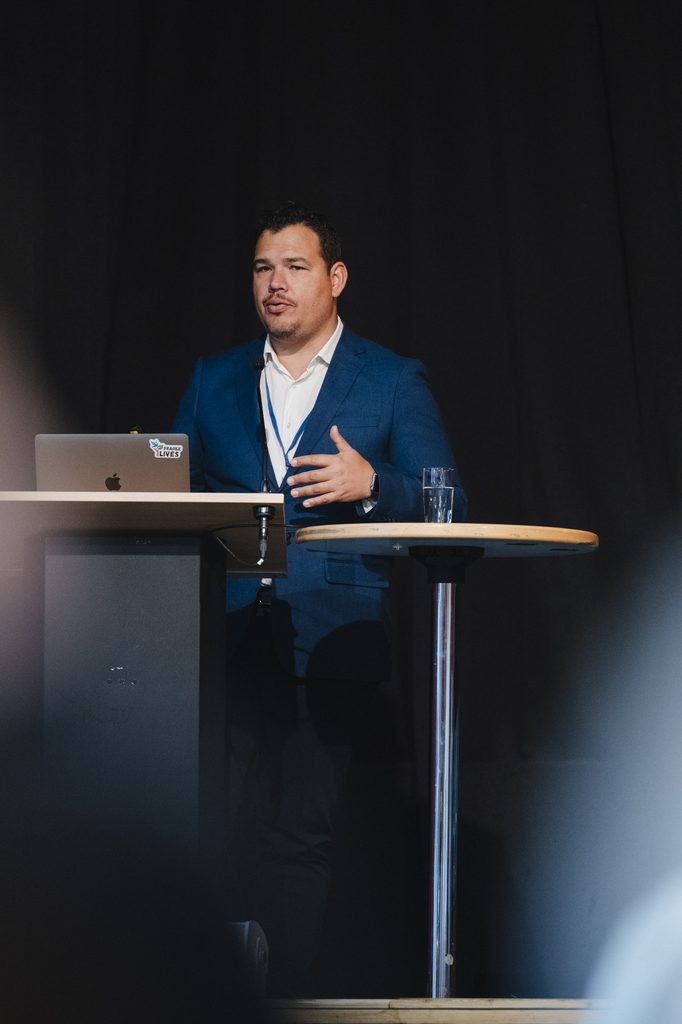
Caitriona Dowd (University College Dublin) gave the first-day keynote, “The Gendered Contours of the Conflict-Hunger Nexus”. She discussed how slowly research, policy and humanitarian practice have integrated gender into their approach to conflict-driven food crises, and what this means for efforts to fight hunger.
Juan Vargas (University of Turin and Collegio Carlo Alberto) gave the second-day keynote, “The Long Shadow of Landmines: Evidence from Colombia and Implications for Policy”. He presented evidence from Colombia on the harm landmines cause long after conflict ends, and on what helps reduce it, including peace negotiations and humanitarian demining.
Conference sessions
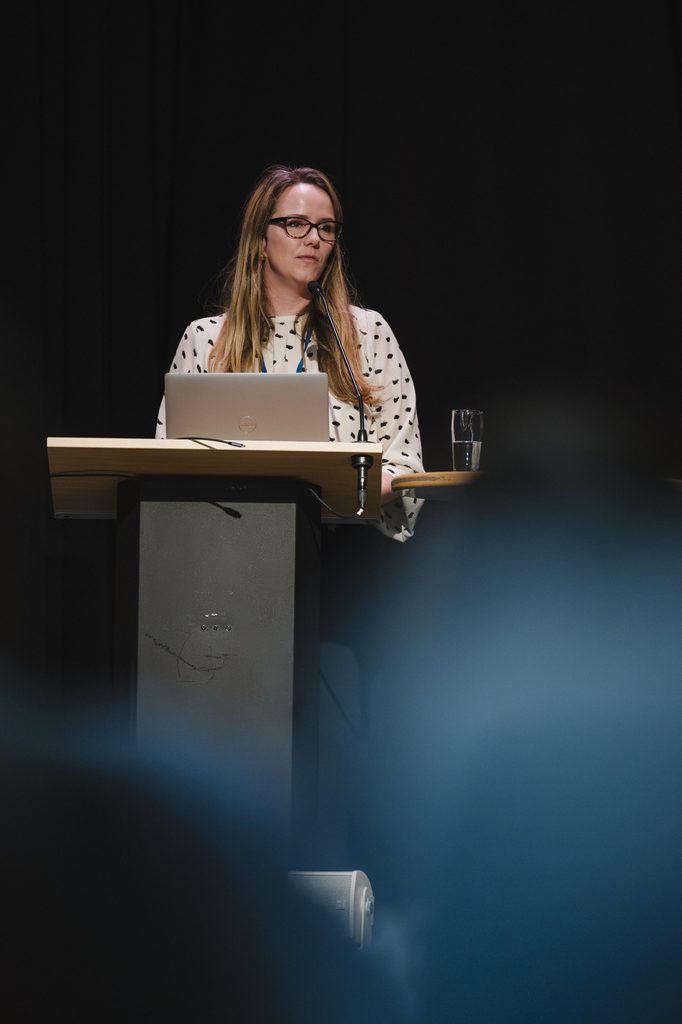
On the first day, sessions covered topics ranging from social assistance delivery, maternal and child health to climate and conflict. The second day featured social protection and displacement, employment and fragility, and refugees and propaganda. The International Rescue Committee (IRC), J-PAL Europe and the UK Foreign, Commonwealth & Development Office (FCDO) also contributed dedicated sessions.
New this year, a poster session on the first day gave 24 researchers the chance to present their work directly to attendees. The posters covered research from Central Asia, the Caribbean, Africa, the Middle East and North Africa, and North America, on topics ranging from maternal health and livestock management to payment systems, urban planning, extreme weather and peacebuilding.
An evening session on AI
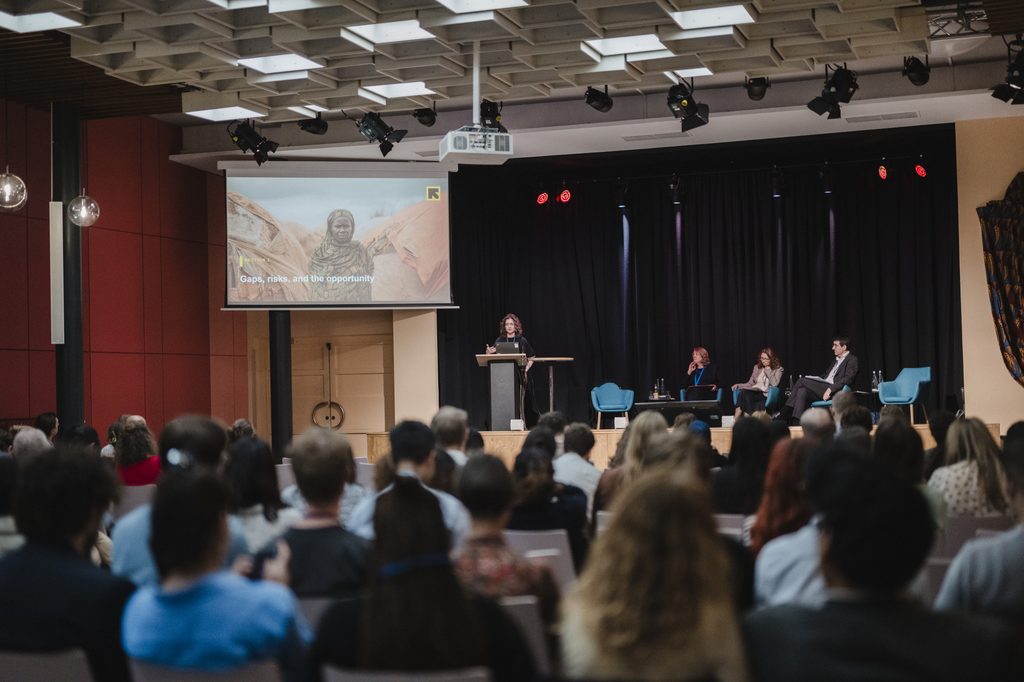
Titled “Reaching the Unreached, Without Doing Harm: How Can AI Scale Cost-Effective Interventions for Children in Fragile Settings?”, this year’s evening session was chaired by Tilman Brück (HU Berlin, IGZ, ISDC) and included a keynote by Jeannie Annan (IRC), followed by a panel discussion with Katharina Spieß (BMZ) and Zlata Bruckauf (UNICEF).
Jeannie Annan described the scale of the challenge: last year, 35 million children under five across 23 crisis settings were acutely malnourished. The good news is that proven, low-cost solutions exist, from a simplified malnutrition protocol that costs at least 20% less to phone-based tutoring for about $1 per child. The problem is that these solutions still aren’t reaching most children. She showed where AI can help, from mapping where children live to plan vaccination routes to an AI coach supporting teachers in northeast Nigeria.
Katharina Spieß brought the policy perspective. She noted that access has become a bigger challenge than ever, that local partners must be strengthened and included in programmes, and that with aid being questioned in new ways, evidence on cost and impact is essential.
Zlata Bruckauf highlighted that as programmes become more data-driven, evaluators must adapt too, using new tools to deliver faster, more relevant evidence and to connect it with the people making decisions about scale.
What’s next?
Fragile Lives 2026 was organized in partnership by Humboldt University of Berlin and the Leibniz Institute of Vegetable and Ornamental Crops (IGZ), with support from ISDC – International Security and Development Center and the German Federal Ministry for Economic Cooperation and Development (BMZ). This year we were proud to work with our program partners J-PAL Europe, the International Rescue Committee and the UK FCDO. The conference aims to foster exchange across disciplines and sectors and to bridge the gap between evidence and action.
We look forward to seeing you at Fragile Lives 2027 on 29 – 30 September 2027 in Berlin.
Thank you once again to everyone who contributed to Fragile Lives 2026!
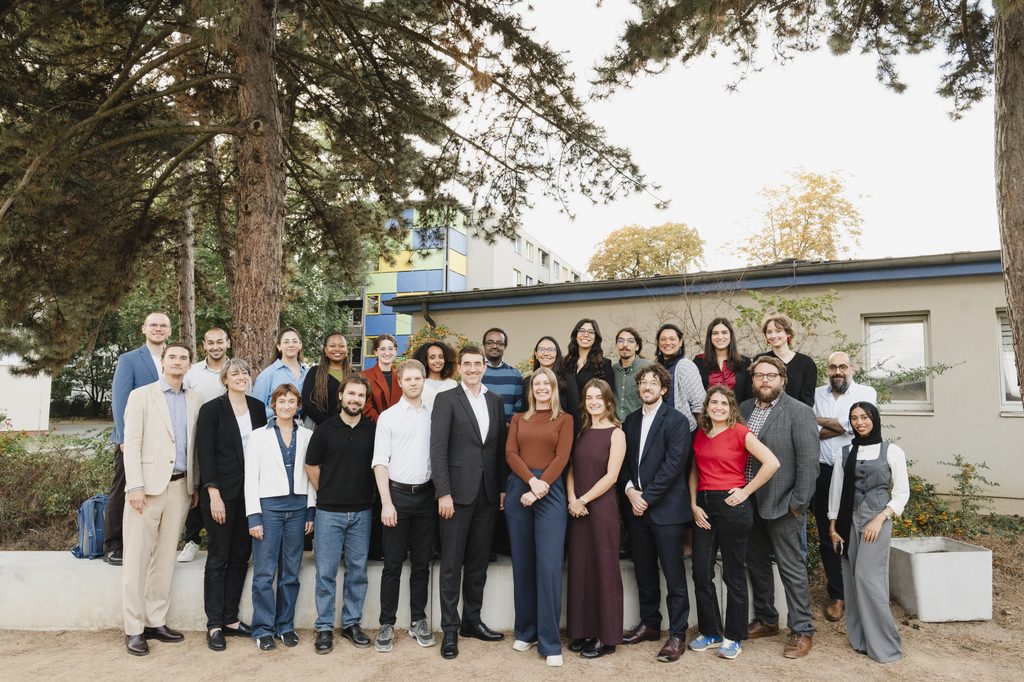
Photo credit: Nancy Jesse/eventfotografen.berlin