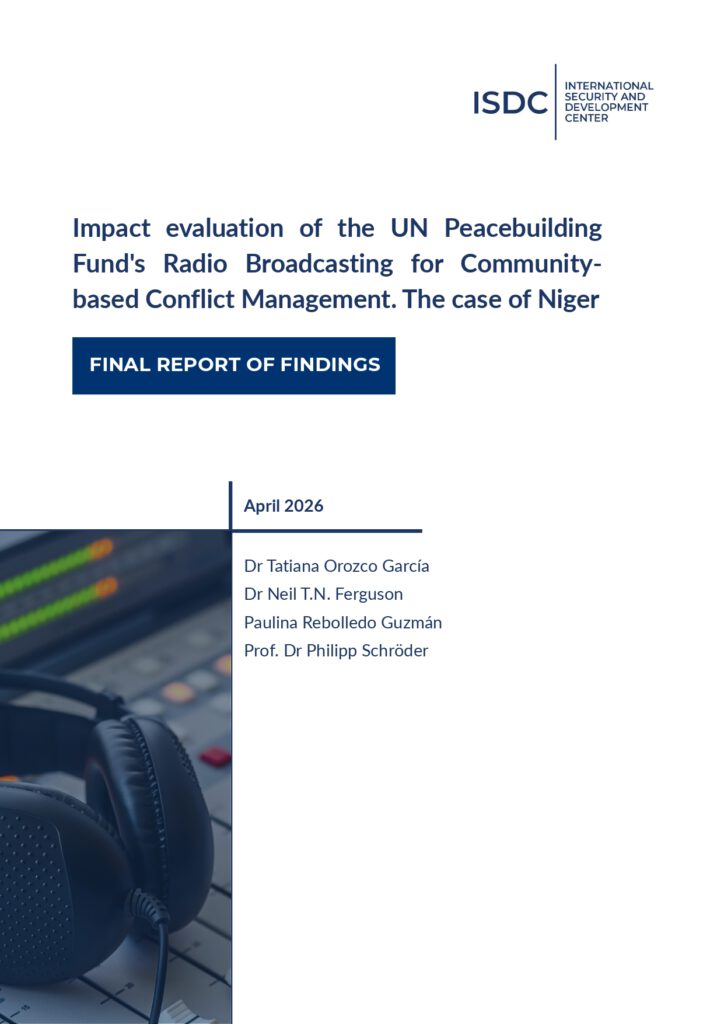
Based on the data collected, the medium-term evaluation of the peace radio project in Niger’s Tillabéri region demonstrates that radio-based peacebuilding interventions can successfully shape key attitudinal outcomes and rebuild social fabric over time. Four years after the intervention, individuals living within the broadcasting coverage areas who were exposed to peace messaging exhibited significant gains in social trust—driven by confidence in family members—and institutional trust, driven primarily by trust in religious leaders. While these findings highlight the power of targeted messaging to foster horizontal and vertical trust in highly volatile, low-trust settings, no significant changes were observed in individuals’ tolerance for violence or broader political attitudes. This indicates that the long-term impact of such media programming is concentrated on reinforcing community cohesion and localized trust rather than driving systemic political shifts.
A French version of the report is also available here.
Publication Details
- Year of Publication: 2026
- Region/s: Sub-Saharan Africa
- Theme/s: Human Development · Impact Evaluation · Individual Decision-making · Micro-Data Collection · Violence & Peacebuilding
- Research Topic/s: Disasters & Emergencies · Peacebuilding & Reconstruction · Social Cohesion · Trust and Prosocial Behaviour · Violence & Conflict